
When trust mattered more than functionality
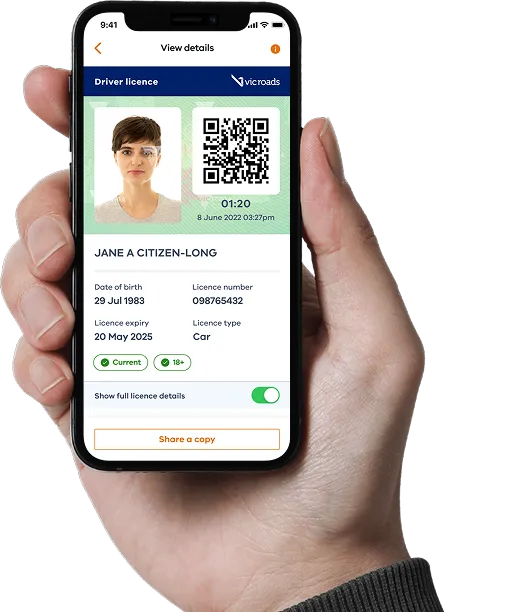
1.8M+ Victorians using the Digital Driver Licence
1.5M+
323K+
Statewide rollout
Overview
The success of the Digital Driver Licence depended less on digitising a physical card and more on helping people trust a new form of digital identity.
Research showed that users wanted the convenience of a digital experience without changing how they already thought about identification. By aligning the experience with existing mental models and using evidence to guide key design decisions, I helped shape a trusted digital identity product now used by more than 1.8 million Victorians.
My role: UX Designer / Product Designer
Collaborators: PM, PO, Solution Architect, Lead Product Designer, iOS and Android Engineers, QA
Scope: Research planning, concept exploration, interaction design, stakeholder alignment and design validation
The problem wasn’t digitisation. It was trust.
Early conversations focused on functionality:
- How should people share their licence?
- What new capabilities could a digital experience unlock?
Research revealed a more fundamental challenge.
People weren’t evaluating the product based on features. They were evaluating whether they could trust it.
One participant captured this perfectly:
“I don’t go anywhere without my phone but I do go out without my licence”
People already trusted their phone. The challenge wasn’t convincing them to use a digital device—it was helping them trust a new way of proving who they are.
That insight became the lens for every design decision that followed.
Designing around existing mental models
Rather than introducing new behaviours, we focused on understanding how people already expected a digital licence to work.
One of the most consequential design decisions centred around licence verification.
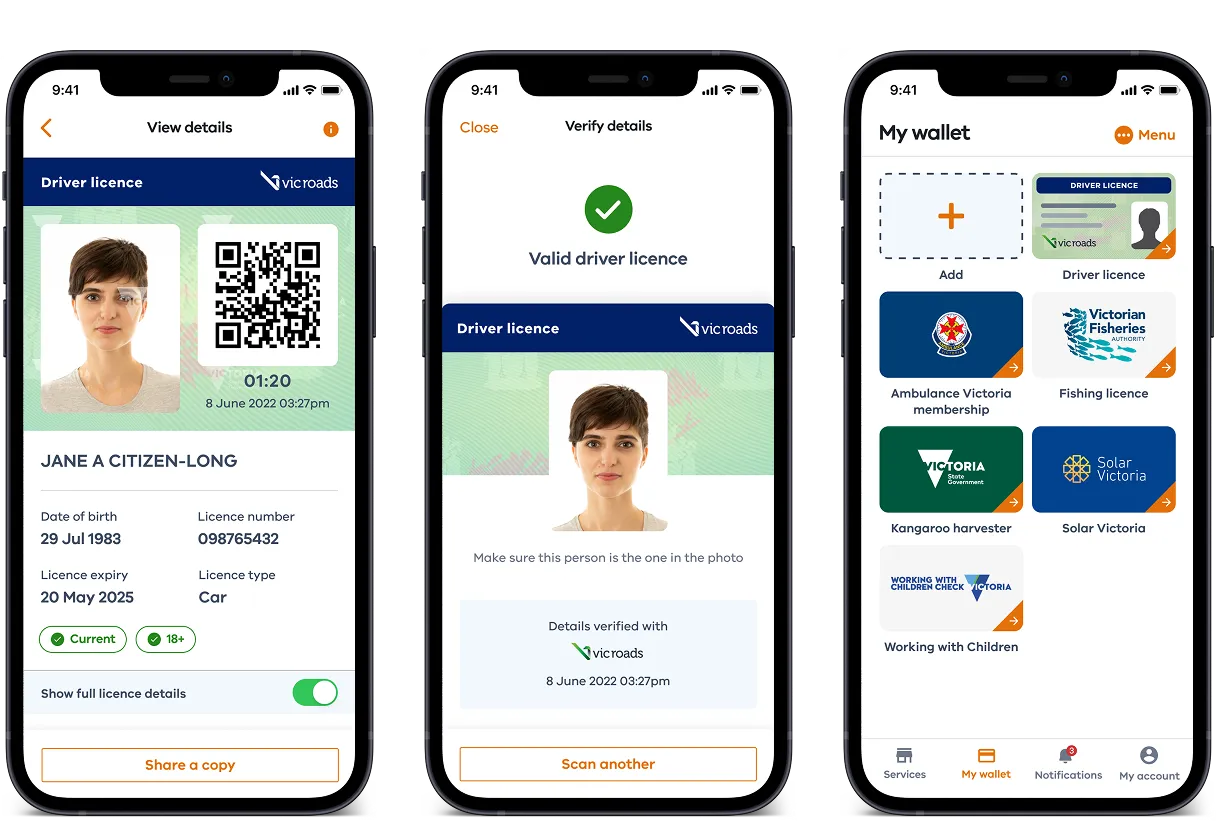
I explored two directions and recommended surfacing the QR code directly on the licence screen.
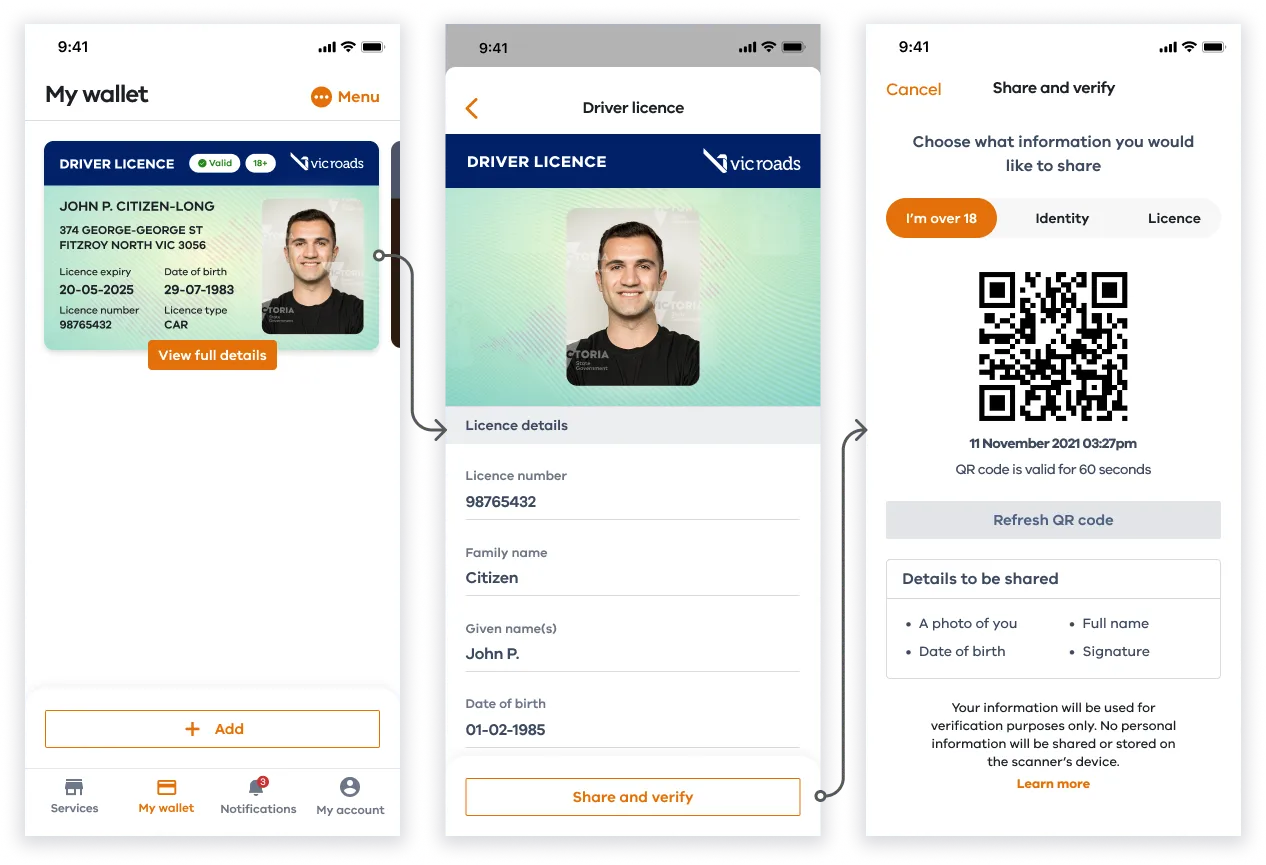
Direction 1: Users tapped a “Share and Verify” button before viewing a separate QR code screen.
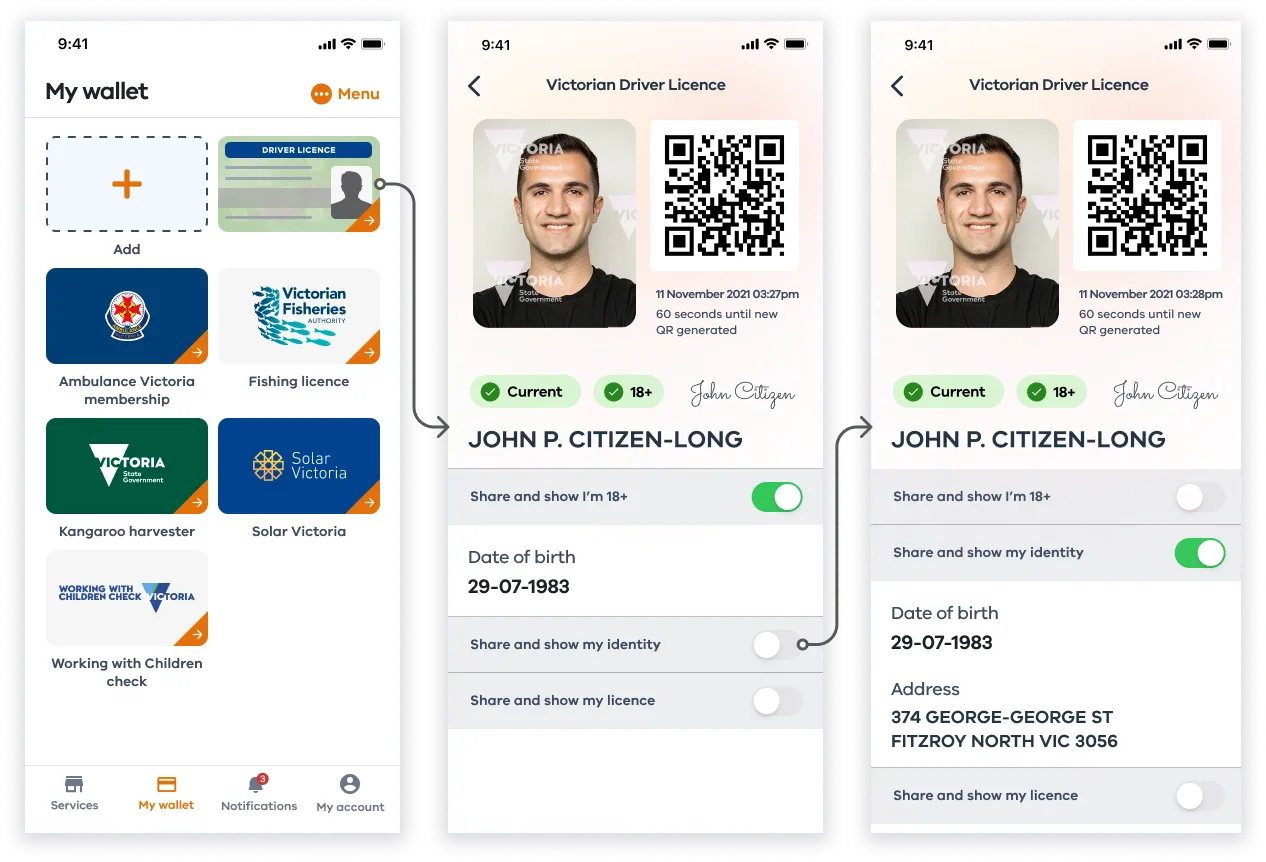
Direction 2: The QR code appeared directly on the primary licence screen, making verification immediately accessible.
Following stakeholder discussions, Direction 1 was initially selected due to concerns that displaying the QR code on the primary screen could increase licence validity checks and place additional load on VicRoads infrastructure.
Rather than accepting the decision as final, I continued gathering evidence through usability testing.
The findings consistently reinforced the same pattern: participants naturally gravitated towards the main licence screen and expected verification to be immediately available. When verification was separated from the primary experience, participants hesitated, required more guidance and were less certain about how the process worked.
I used these findings to challenge the existing direction and advocate for a verification experience that better aligned with users’ expectations.
The evidence ultimately influenced the final decision, leading to the QR code being surfaced directly on the licence screen.
The outcome was a faster, more intuitive verification experience that reduced interaction steps, improved usability scores and increased confidence in the licence as a trusted form of digital identification.
Designing for two audiences
A unique challenge of the Digital Driver Licence was that it needed to work for both the person presenting their licence and the person verifying it.
Police officers, venue staff, businesses and other third parties needed confidence that what they were seeing was legitimate and easy to validate.
Every interaction needed to build confidence for both audiences—adding a layer of complexity beyond a typical consumer product.
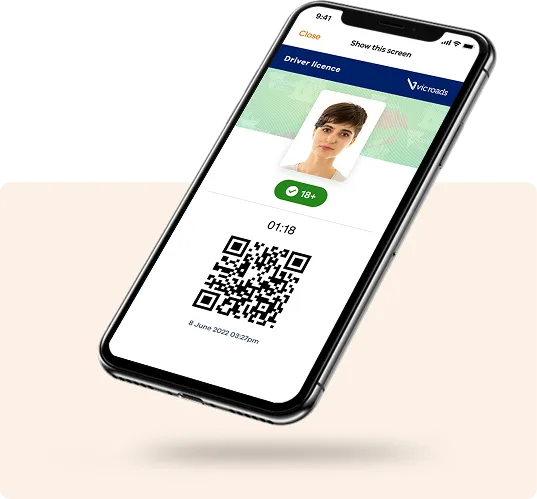
Outcome
Today, more than 1.8 million Victorians use the Digital Driver Licence, with over 1.5 million licences added to the Service Victoria app and more than 323,000 active users.
The successful launch has made the Digital Driver Licence one of Victoria’s most widely adopted digital government services.
By designing around existing behaviours and expectations, we created a digital identity experience that felt intuitive for everyday users while satisfying government, compliance and technical requirements.
Key takeaway
Rather than reinventing the driver licence, we preserved the mental models people already trusted and used technology to make identification simpler, faster and more accessible.
The result was a digital identity experience that felt familiar enough to trust and convenient enough to adopt at scale.