
Designing trust in a black box
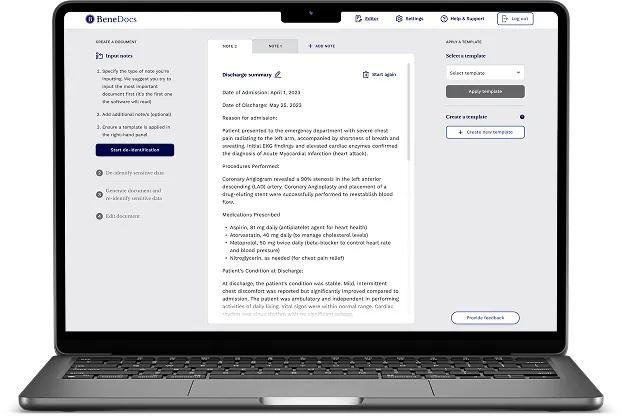
Overview
In late 2023, AI products were rapidly emerging, but there were few established patterns for how professionals could safely work alongside them.
BeneDocs was an AI-powered clinical documentation platform designed to help healthcare professionals turn clinical notes into structured documents with less manual effort.
The underlying technology already existed. My challenge was translating a technically complex AI workflow into a dependable product experience doctors could trust and confidently adopt.
I led product design from discovery through to beta, partnering with founders, designers and engineers to simplify the workflow, shape the interaction model and make the system usable in clinical practice.
My role: Product Designer
Collaborators: Founders (Doctor & Nurse), Design, Engineering
Scope: Workflow design, interaction design, systems thinking, stakeholder alignment and design validation
Simplifying a complex AI workflow into a trusted clinical experience
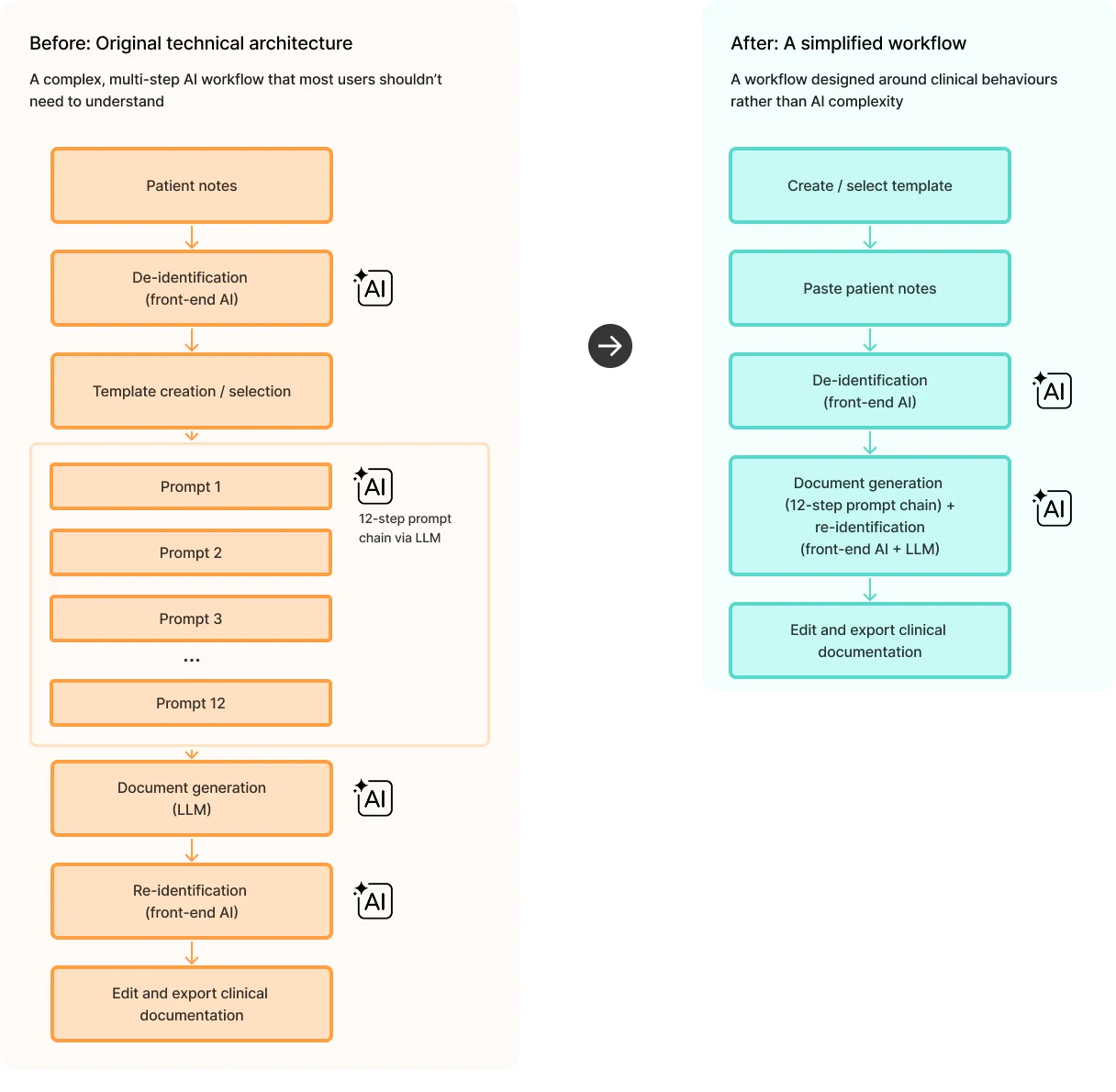
The most difficult part of the project wasn’t designing the interface. It was deciding how much of the AI process users actually needed to see.
Early discussions suggested exposing more of the workflow to increase transparency, but this created more questions than confidence.
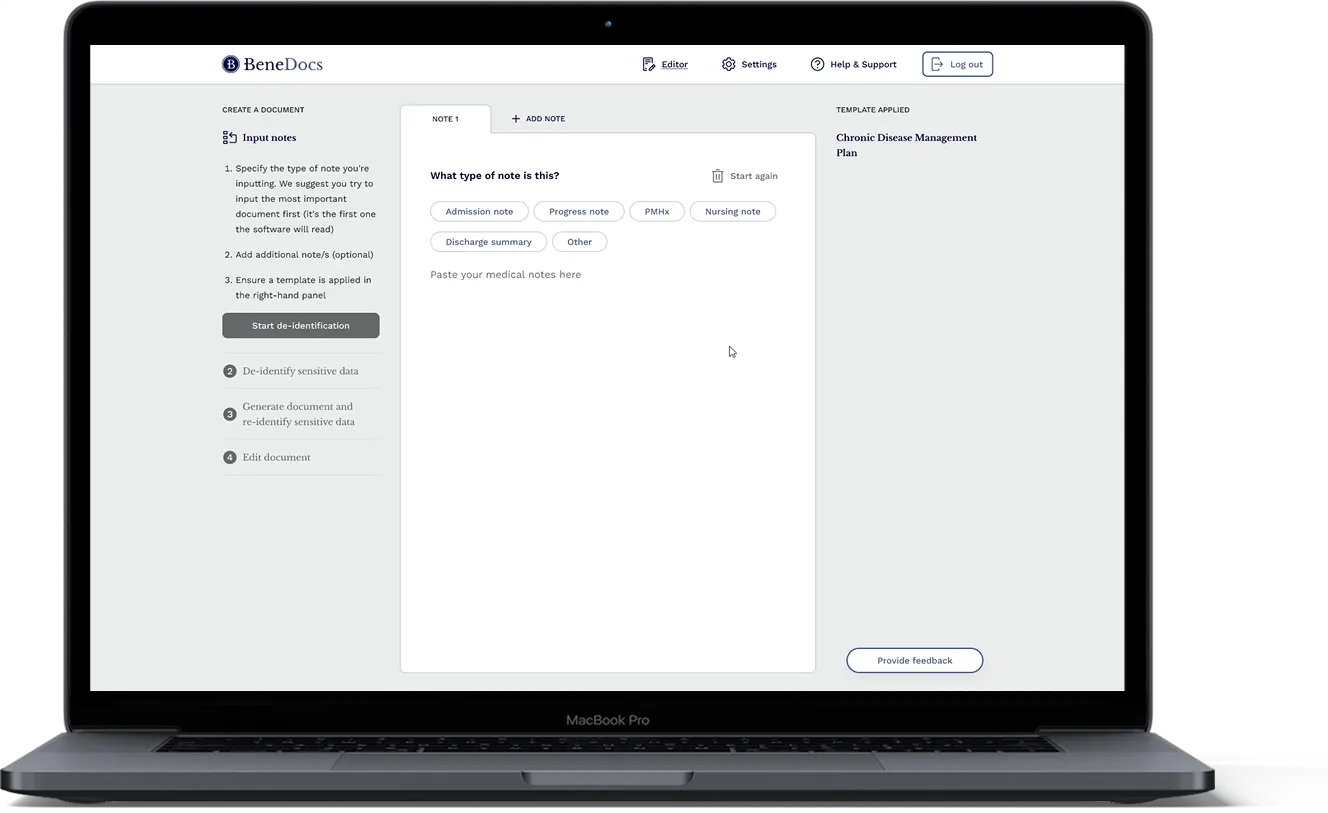
I simplified the experience into a five-step workflow that aligned with existing clinical behaviours and kept attention on reviewing outputs rather than understanding how the AI worked.
BeneDocs relied on a sophisticated AI workflow, but doctors didn’t care about prompt chains or model architecture.
They needed confidence that patient information remained private, the system was working as expected and they remained in control of the final document.
Success depended less on explaining the technology and more on helping doctors trust the outcome.
Designing confidence in an unpredictable system
The moment of greatest uncertainty wasn’t when doctors entered their notes. It was when the AI took over.
Once information entered the AI workflow, nobody could reliably determine how long processing would take. The underlying prompt chain operated as a black box, making traditional progress indicators misleading.
A progress bar suggesting 70% completion could easily be wrong. An endless spinner risked making the product feel broken.
Rather than relying on percentages, I designed dynamic status updates that reassured doctors of three things:
- The system was still working
- Patient information remained secure
- They had not lost control of the process
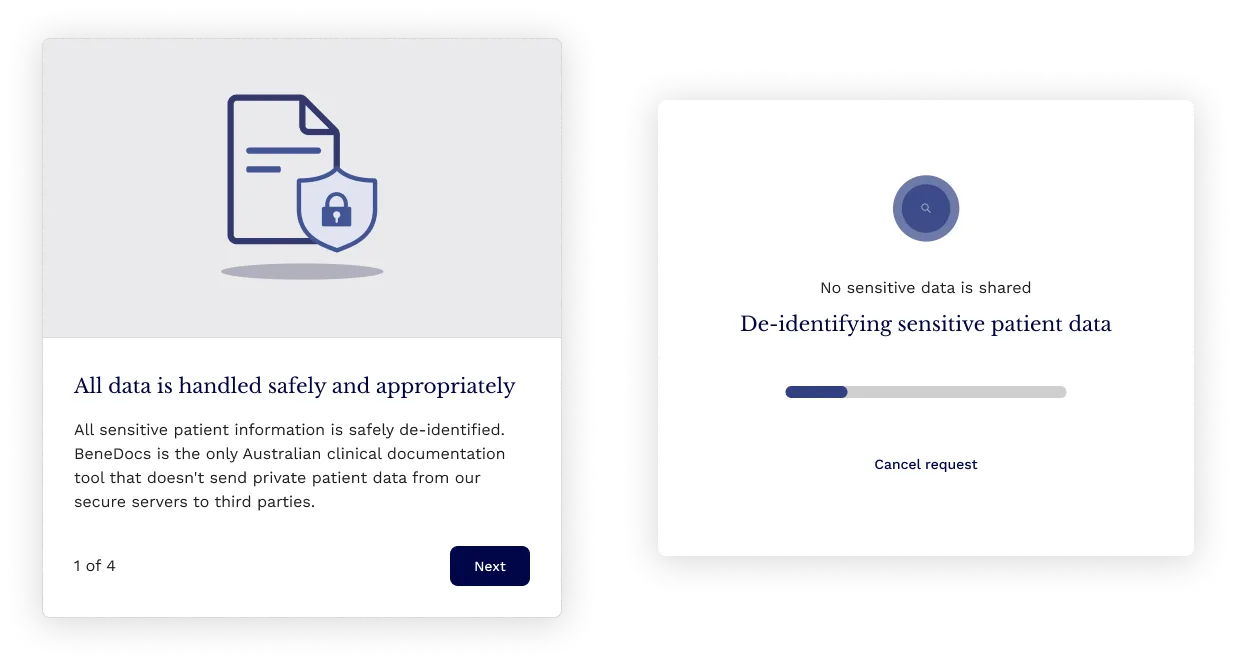
The goal wasn’t to make the AI feel magical. It was to make it feel dependable.
By focusing on confidence rather than technical transparency, we created an experience that remained trustworthy despite the uncertainty behind the scenes.
Improving outcomes before generation begins
One of the most important product decisions centred on how BeneDocs learned a clinician’s writing style.
The original approach used a clinician’s first set of notes as the default template. It was technically simple, but risky: users had little visibility into how the AI was learning, and output quality depended on whatever content happened to be pasted first.
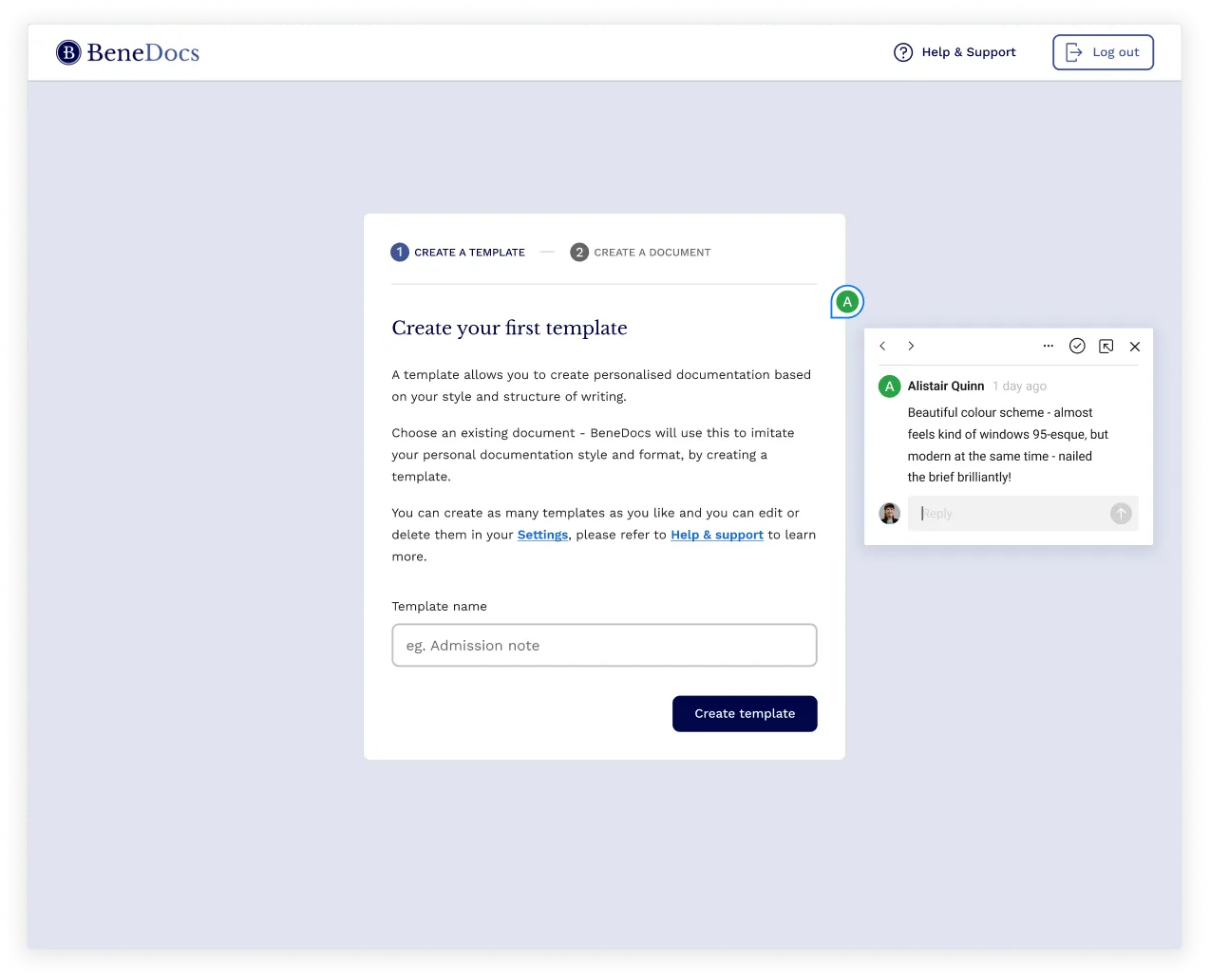
I challenged this approach and advocated for a more intentional onboarding step, where doctors uploaded a high-quality example document before generating their first output.
This added a small amount of upfront effort, but gave doctors greater control over quality and improved output consistency from the start.
It also reframed templates as a scalable product system, creating a path to support multiple document types, writing styles or clinical contexts over time.
The Outcome
The BeneDocs experience transformed a highly complex AI workflow into a clear, structured workflow doctors could review, control and confidently use.
By reducing unnecessary technical detail, the experience shifted attention away from the AI itself and back to the job to be done.
While I left the project before launch, the work reinforced an important lesson about designing for emerging technologies:
Users don’t adopt products because the technology is impressive. They adopt them because the experience feels trustworthy.
Key takeaway
Emerging technologies often create technical possibilities before they create usable experiences.
My role wasn’t to design the AI itself. It was to design the conditions doctors needed to trust it: clarity, control and confidence in the final output.
The biggest lesson was that designing for AI adoption is not about revealing everything the system does. It is about giving users enough confidence to trust the moments they cannot see.